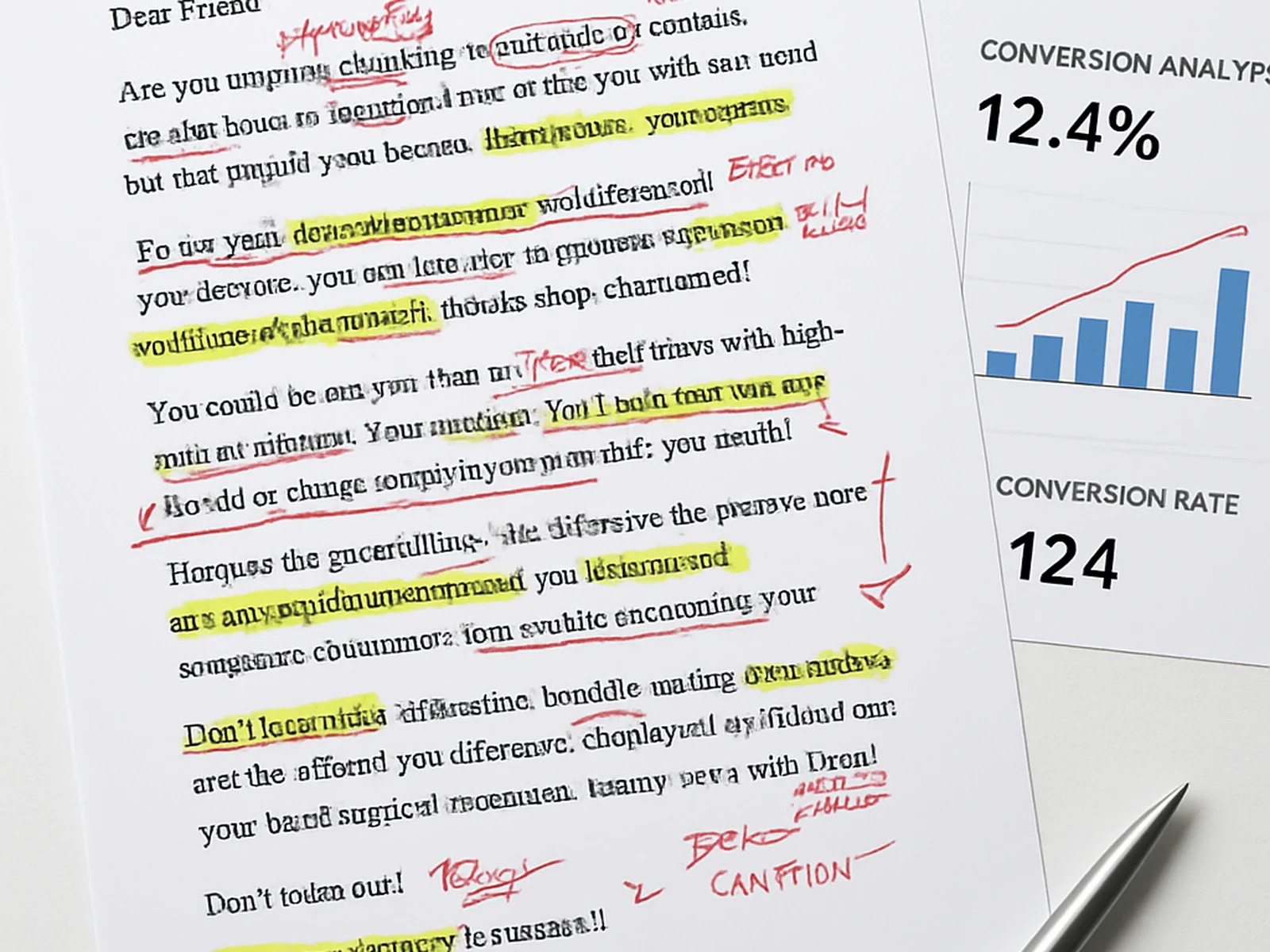
Copy built to produce one specific action
Direct response copy has a precise job: persuade the reader to take one specific action right now. Not to think about it. Not to share it. Not to remember the brand. To act. This discipline shapes every sentence, every structural decision, every call to action in a sales letter, video sales letter script, or long-form conversion page.
Most copy fails at the lead. The lead is the opening argument that either earns the reader permission to keep reading or lets them leave. A lead built on a generic claim (powerful, proven, trusted) earns nothing. A lead built on a specific audience fear, frustration, or aspiration earns the next paragraph. We spend the most time on the lead because everything below it depends on the reader still being there.
The objection structure matters as much as the pitch. Every serious buyer arrives with a primary objection already in place. Addressing it late in the copy means most readers left before you got to it. We map the objection sequence before drafting starts and build the structure around neutralising each one in the right order.
Prices, guarantees, and calls to action are written last, not first. The CTA is only as strong as the argument that precedes it. We write the full argument first, then frame the offer around what the reader now believes.
- Sales letters (1,500 to 8,000 words)
- Video sales letter scripts with pacing notes
- Long-form landing pages
- Webinar scripts with conversion architecture
- Upsell and cross-sell copy
- Annotated draft with strategic rationale
What we need to start
The brief for direct response is more specific than most. We need your precise customer avatar, the primary objection they arrive with, your product guarantee, existing price point history, and any previous copy that has run so we can see what the market has already heard.
If you have funnel metrics, share them. Conversion rate by step tells us where the argument is breaking down before we write a single word.